Drayage may cover a short physical distance, but the brokerage workflow around it can involve more handoffs than a much longer over-the-road shipment. Container references, port or rail activity, pickup and delivery requirements, third-party carriers, documents, customer updates, connected freight legs, and billing details all have to stay aligned.
For a non-asset drayage brokerage, the transportation management system is not a fleet-management tool. It is the operating record that connects the customer order to the outside carriers and partners executing the move.
That distinction should shape how a brokerage evaluates drayage TMS software.
What is a drayage brokerage?
A drayage brokerage arranges short-distance container transportation through qualified third-party motor carriers rather than relying entirely on company-owned trucks and drivers. The brokerage coordinates the customer requirement, carrier capacity, shipment details, documents, status updates, exceptions, and commercial handoffs surrounding the move.
Some brokerages handle drayage as a standalone service. Others coordinate it as one part of a larger intermodal, truckload, transload, or managed transportation workflow.
The operational challenge is not simply finding a truck. It is keeping every participant aligned around the same shipment information while the container moves through multiple facilities, systems, and organizations.
A brokerage TMS should organize the customer order, outside carrier relationships, shipment execution, visibility, documents, and commercial handoffs. Driver payroll, fuel tax, equipment maintenance, and company-truck routing belong to a different operating model.
Why does drayage create different requirements?
A general truckload record usually starts with an origin, a destination, equipment requirements, timing, and a carrier assignment. Drayage can add another layer of references, events, and dependencies.
- Container numbers and customer references
- Port, rail, terminal, warehouse, or transload locations
- Multiple stops, carriers, or connected freight legs
- Documents, milestones, and outside-party updates
- Customer visibility and exception ownership
- Completion details that support billing readiness
The TMS does not have to own every outside event. It does need to keep the brokerage’s operational context connected so the team can see what has happened, what is missing, and who owns the next action.
What should non-asset drayage brokerages look for in a TMS?
1. A shipment record built for container freight
The system should recognize drayage and intermodal as real shipment types, not force the operation into a generic truckload record with critical details stored in notes.
During a demonstration, ask where the team records the container number, customer references, locations, stops, equipment details, timing requirements, documents, and connected legs. Then ask whether those fields remain visible through tendering, tracking, delivery, and billing.
2. Carrier coordination without pretending the brokerage owns the fleet
Non-asset brokerages need to manage carrier relationships and assignments, not maintain company trucks or driver logs. A useful brokerage workflow should help the team evaluate and assign third-party carriers, retain the commercial context of the agreement, connect the carrier to the shipment, and keep communication and documents associated with the load.
If a product demonstration centers on driver payroll, fuel tax, equipment maintenance, or company-truck routing, it is probably presenting a carrier operating system rather than a brokerage TMS.
3. Multi-stop and multi-carrier continuity
Drayage does not always end when a container leaves the port or rail ramp. The customer order may include a warehouse, a transload step, a final delivery, or another transportation mode.
A brokerage should determine whether the TMS can preserve the shared customer and shipment context while supporting multiple stops or carriers. Related work should remain connected without hiding accountability for each leg.
4. Tracking that supports operations, not just a map
Container visibility is valuable when it helps the brokerage act. A location point alone does not explain whether a handoff is complete, a required document is missing, or a customer update is due.
Review how the system connects tracking to the shipment, distinguishes routine progress from exceptions, shares approved milestones, and handles gaps in outside data. Integration coverage varies, so confirm the specific partners, messages, and workflows required for your freight.
5. Documents that stay with the move
When shipment files live in inboxes and shared drives, operations and accounting can end up working from different versions of the same move. The TMS should give the brokerage a consistent place to retain documents and make them available to the people handling execution, customer service, and billing.
6. Customer visibility under the brokerage’s brand
Customers want useful status without having to call for every update. Ask whether they can access permitted shipment status and documents through a controlled, branded customer portal. The goal is an appropriate customer view while operations works from the complete record.
7. A clear path from execution to billing
Operational completion and billing readiness are related but not identical. Missing delivery documents, unresolved charges, or incomplete shipment details can delay invoicing and create avoidable rework.
Map what information and documents must be present, how customer and carrier charges are represented, what moves to accounting, and who resolves an exception. This exposes whether the TMS supports a connected workflow or simply stores isolated shipment records.
How should a brokerage evaluate drayage TMS software?
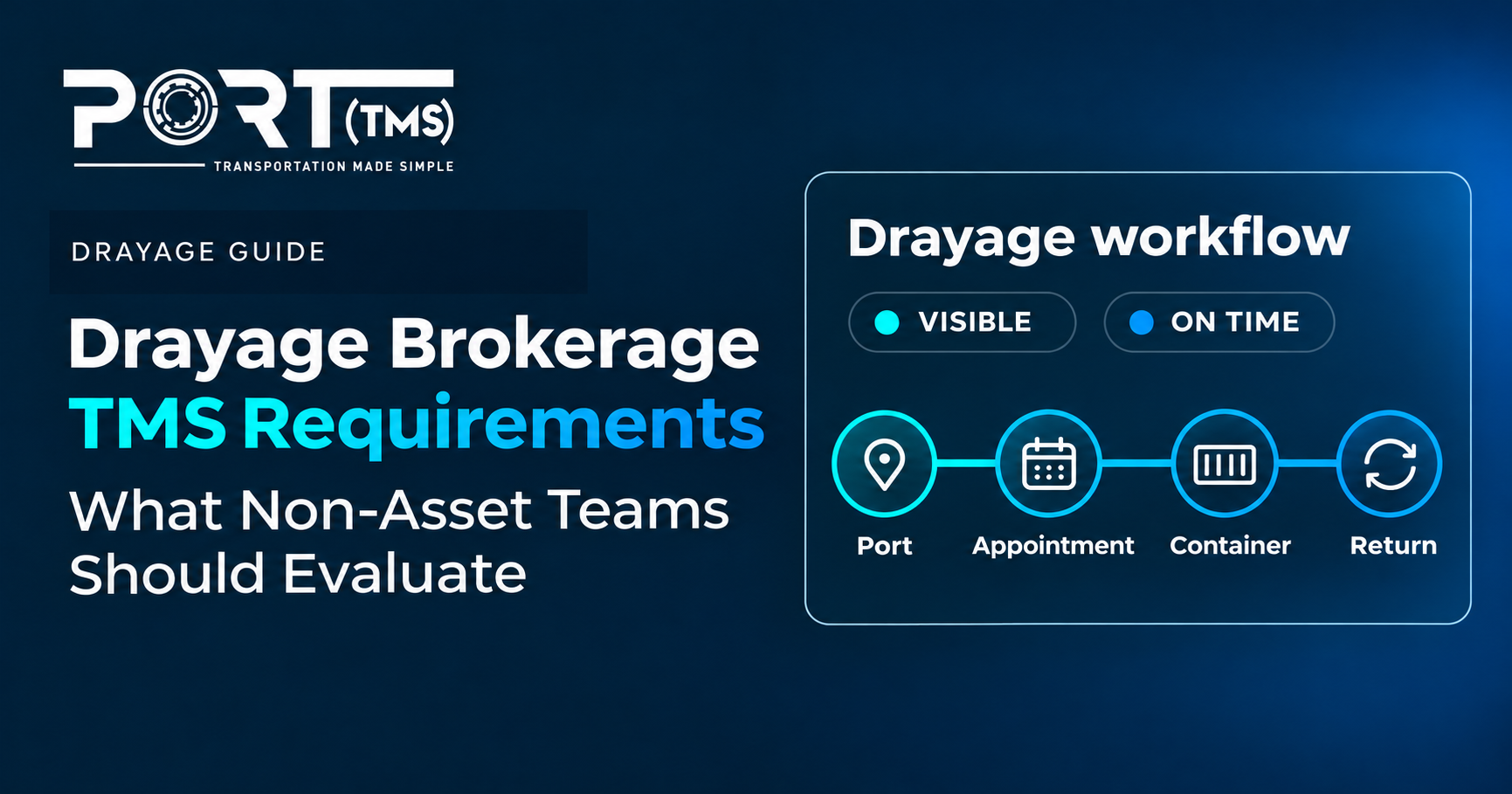
Bring a representative shipment to the demonstration. Use one that includes the complications your team actually handles, such as multiple stops, an outside drayage carrier, a connected truckload leg, customer-specific references, documents, and an exception.
- Build the shipment. Capture the customer order, container details, locations, timing, and references.
- Coordinate capacity. Assign the relevant carrier or carriers and preserve the commercial context.
- Execute and track. Connect status, identify an exception, and make ownership clear.
- Share the right view. Give the customer useful, permissioned visibility without exposing internal work.
- Document and close. Collect completion documents and prepare the shipment for billing.
Avoid evaluating the product through disconnected feature screens. A brokerage succeeds or fails through handoffs, so the demonstration should prove that the handoffs work.
Questions to include in a drayage TMS evaluation
- Are drayage and intermodal native shipment types?
- Where is the container number stored and displayed?
- Can the workflow support multiple stops and carriers?
- How are rate confirmations and shipment documents connected?
- Which tracking, EDI, and API connections are available?
- How does the system handle missing or delayed outside updates?
- Can customers receive a permissioned, branded view of their freight?
- How does the shipment move from execution to billing readiness?
- Can drayage remain connected to truckload, partial, or intermodal legs?
- What implementation work is required for specific partners and data flows?
The best answer is not always a simple yes. A credible provider should identify what is standard, what depends on an integration, and what must be confirmed during solution design.
How Port TMS approaches drayage and intermodal workflows
Port TMS is designed for freight brokers, 3PLs, and logistics teams. Drayage and Intermodal are native shipment types inside the same Build Load workflow used for Full Truck Load and Partial.
Teams can capture a container number and keep customer, carrier, tracking, document, and billing context connected to the shipment. The same rate confirmation process applies across supported shipment types. Port TMS also supports multi-stop and multi-carrier workflows, with Rail EDI available for connected intermodal tenders.
Connected tracking options include Trucker Tools, Load Market, Project44, and Convoy/DAT geofencing. Exact partner availability, messages, and implementation requirements should be confirmed during solution design.
For a non-asset drayage brokerage, the value is not fleet administration. It is maintaining one operational workflow across the customer order, third-party carriers, connected freight legs, visibility, documents, and billing preparation.
See the workflow using your drayage operation
Use a representative container move to evaluate how Port TMS connects third-party carriers, visibility, documents, and billing readiness. Book a tailored demo and bring the stops, references, documents, tracking requirements, and customer handoffs that make your workflow complex.